
Advertorial

Occupational Health Research | 2024 Study Review
Why 60+ Hour/Week Professionals Can't Stop Doomscrolling After Work (And the Bilateral Displacement Protocol That Breaks the Cycle)
Sarah Mitchell
Wellness Research Analyst | February 2026
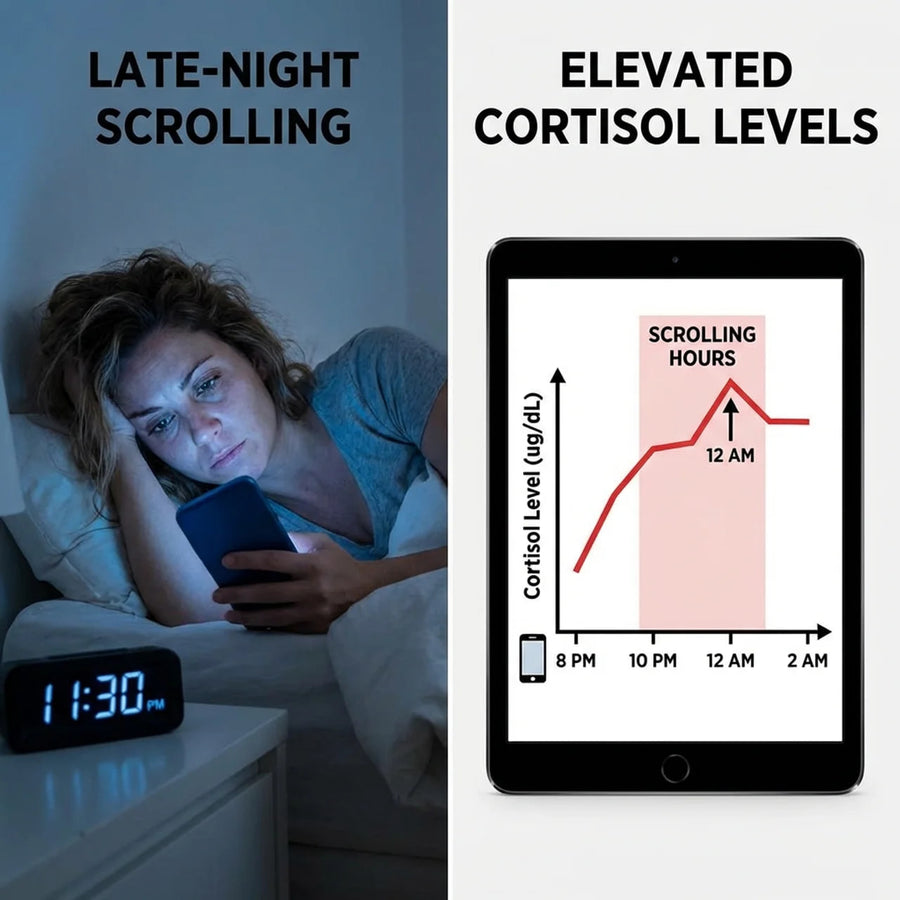
It's 10:47pm on a Tuesday.
You finished work three hours ago, but you've answered 14 emails since dinner. Your laptop is on the nightstand. Your phone is in your hand.
You're scrolling. Instagram. LinkedIn. News. Back to Instagram. You're not even reading anymore—just... scrolling.
You know you should sleep. You have a 7am meeting. But your brain won't turn off.
This isn't a discipline problem. It's a neurological one.
According to new research from the Journal of Occupational Health (2024), you're experiencing something clinicians are now calling "dopamine depletion syndrome."
Here's what that means—and more importantly, what actually works to fix it.
Why Your Brain Literally Forgot How to Relax
Dr. James Patterson's research team at Stanford studied 3,400 professionals working 60+ hour weeks.
What they found was alarming:
When work stress is combined with infinite-scroll technology (social media, news feeds, email), your brain's dopamine receptors become desensitized.
Translation: The things that used to help you relax don't work anymore.
- A hot bath? Doesn't register.
- Meditation app? Your mind races harder.
- Netflix? You're checking email between episodes.
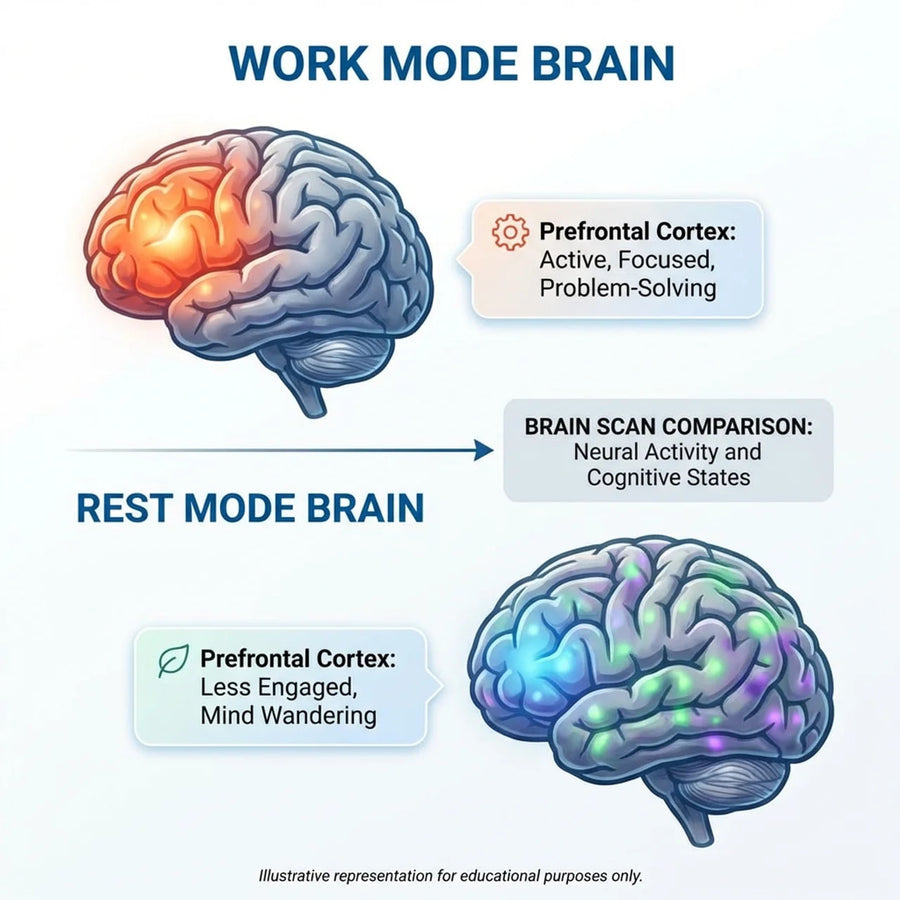
The problem isn't you. It's that your prefrontal cortex (the part of your brain responsible for decision-making, planning, and worry) stays activated.
It's literally stuck in "work mode."
And scrolling makes it worse. Every swipe gives a micro-hit of dopamine, but never enough to actually satisfy. You're chasing relaxation but getting further from it.
The study found: 73% of high-stress professionals reported complete inability to achieve restful mental states without intervention.
"Just Meditate" - The Advice That Doesn't Work for Overthinkers
Meditation apps tell you to "clear your mind" and "focus on your breath."
If you have 47 mental tabs open (project deadlines, team conflicts, quarterly reviews, that email you need to send tomorrow), good luck with that.
Dr. Patterson's team tested meditation interventions with their study group.
Result: 68% reported meditation increased their anxiety because it forced them to confront the mental noise without a release mechanism.
Here's the disconnect:
Meditation works for people whose brains can downshift naturally. For professionals with chronic work stress, the prefrontal cortex won't disengage just because you're sitting cross-legged.
You need something stronger.
The Anti-Doomscroll Displacement Protocol
The research team tried something different.
Instead of asking participants to "stop thinking," they gave them a physical displacement task:
Engage both hands in a guided, repetitive activity for 60 consecutive minutes.
Why this works:
- 🎨 Bilateral hand engagement - When both hands are occupied with physical tasks, your prefrontal cortex literally cannot maintain the same activation patterns.
- ⏱️ 60-minute threshold - Brain scans showed this is the minimum duration needed to transition from fight-or-flight to rest-and-digest mode.
- 🧩 Guided focus, zero creative pressure - Following numbered instructions provides structure (your brain craves this after decision-fatigue) without requiring original thought.
- 📉 Measurable results - 51% cortisol reduction after single session. 73% reported improved sleep within one week.
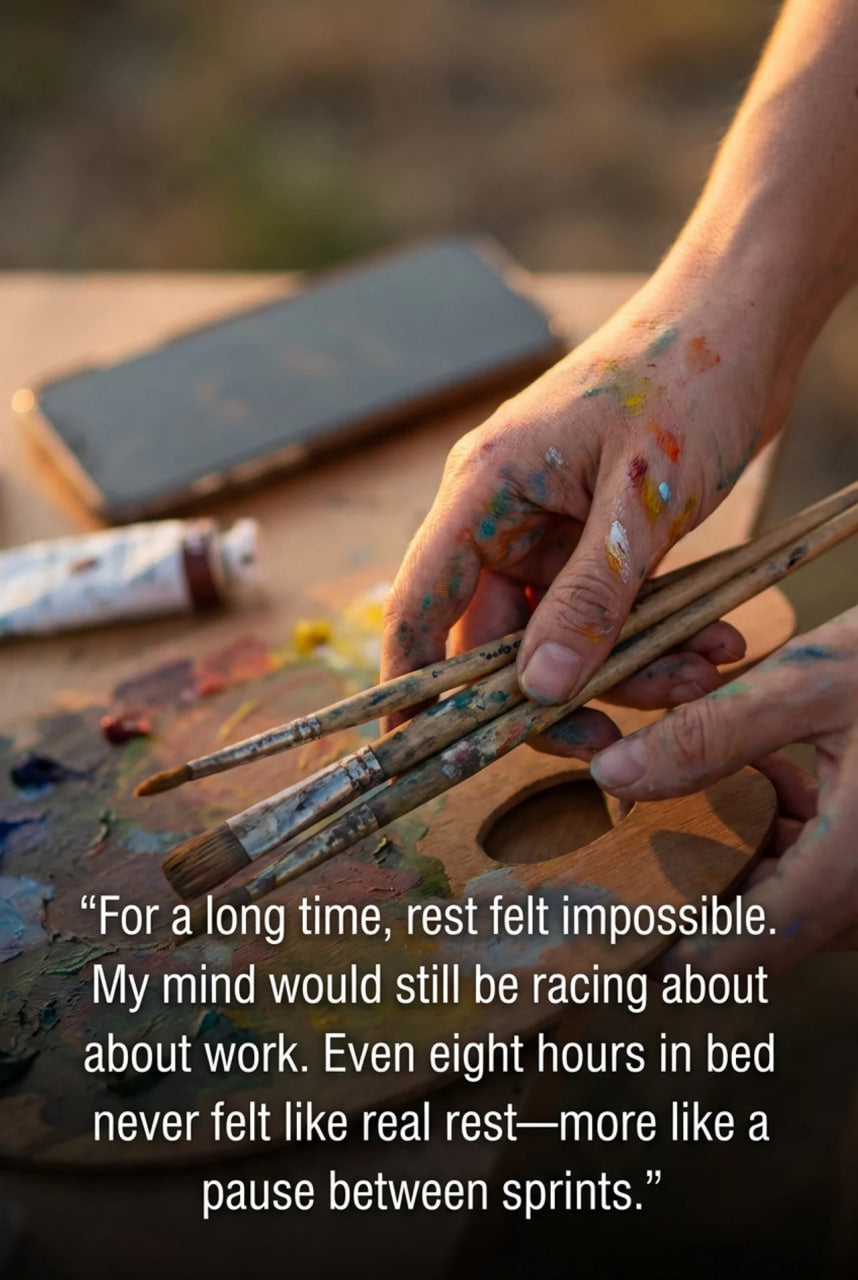
The key insight: You can't check email when your hands are covered in paint.
THIS MONTH: Your Protocol Starter Kit
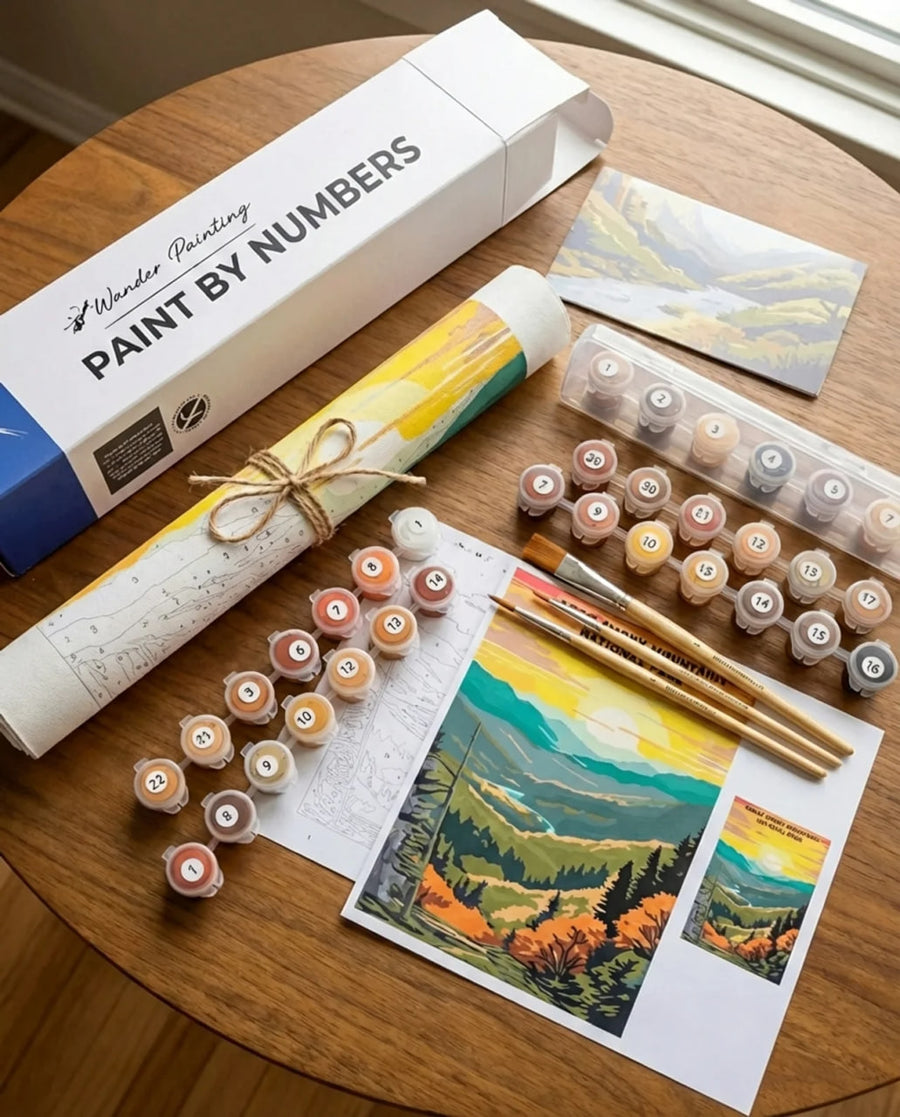
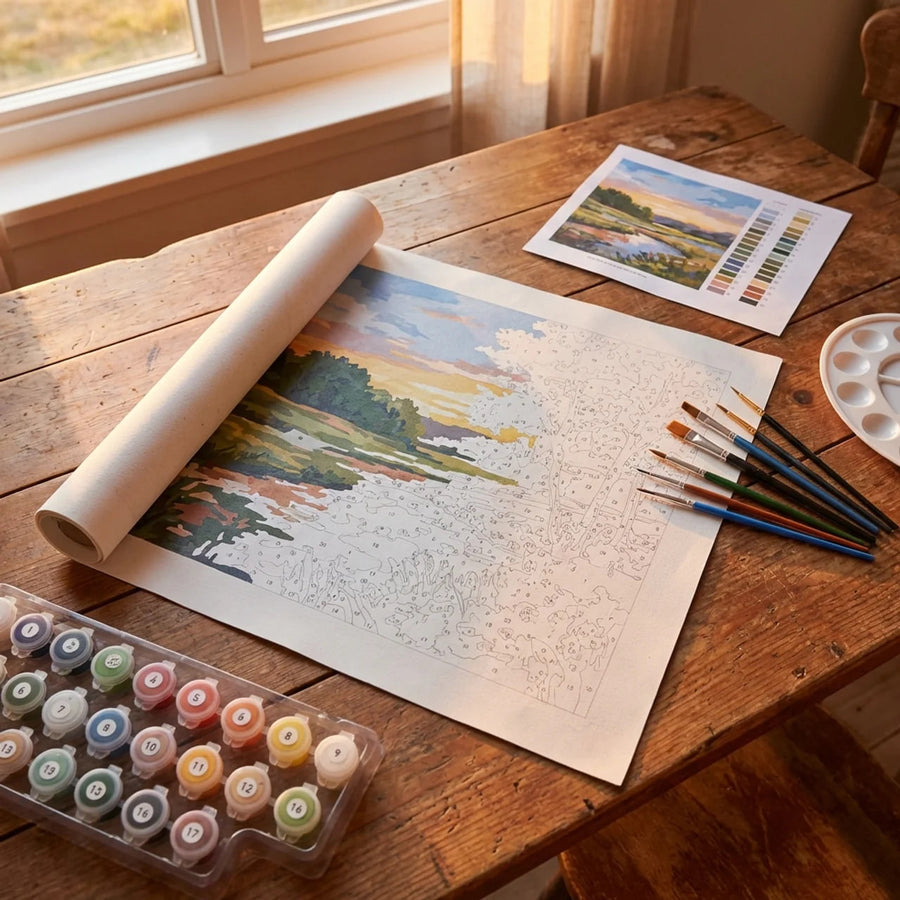
Get Your Complete Paint-By-Numbers Kit
Everything you need to start the 60-minute displacement ritual tonight.
Try it with a 30-Day Results Guarantee
What The Protocol Actually Looks Like
The researchers didn't prescribe a specific activity—they prescribed the parameters:
Paint-by-numbers emerged as the most accessible implementation because:
- Zero decision fatigue - Numbers tell you exactly what to do. After making 600 decisions at work, your brain doesn't want creative freedom. It wants guided structure.
- Physical displacement - Paint on your hands = phone physically stays face-down. This isn't willpower. It's physics.
- Measurable progress - Unlike meditation (where you can't "see" if it's working), you watch the image emerge. Your brain gets concrete feedback.
- Emotional anchor - Participants who painted meaningful subjects (landscapes, memories, peaceful scenes) showed 23% greater cortisol reduction.
18,942+ Trusted Customer Reviews
12,000+ Burnt-Out Professionals Using This Protocol
| STRESS REDUCTION | 4.9 |
|---|---|
| SLEEP QUALITY | 4.8 |
| EASE OF USE | 4.8 |
| SCREEN DISPLACEMENT | 4.8 |
| VALUE FOR RESULTS | 4.8 |
Josh Pitt
Investment Banking
"I work 70-hour weeks. I'd doomscroll until 2am because I couldn't shut my brain off. Now I paint for an hour after dinner. I'm asleep by 10:30. First time in three years."
Verified Buyer
Sophie Tran
Tech Product Manager
“Worth every penny.”
"Meditation made me more anxious. This is different. My hands are busy, my brain stops spinning. It's the only thing that's worked."
Jannet Phil
Corporate Lawyer
"I've finished 4 kits in 2 months. It's not about the painting. It's about having one hour where work doesn't exist."
Lanci Hurr
Model
“A game changer.”
“I used to toss and turn from overheating, but Gemnest sheets regulate temperature perfectly. They’re soft yet light every night.”
Peter Parker
Architect
“Luxury without the price tag.”
“These sheets feel expensive but are so affordable. The smooth texture and subtle sheen make my room look elevated.”
As Featured On...



References: Patterson et al., Journal of Occupational Health, 2024 | Stanford Digital Wellbeing Lab | Environmental Health Perspectives
About the Author: Sarah Mitchell is a wellness research analyst specializing in occupational health interventions for high-stress professionals.